

This post may contain affiliate links. Please see our disclosure policy.
Let’s talk about one of the most hyped-up, health-boosting ingredients in our pantries — olive oil. Not just any olive oil, though. I’m talking about the real stuff. The golden-green magic that elevates every dish, supports heart health, and can make your kitchen feel like a Tuscan villa with just one drizzle.
But here’s the thing. Not all olive oil is created equal. In fact, a lot of what you see on grocery shelves is farm from the cold-pressed, extra virgin olive oil it claims to be. So how do you know what you’re really getting? Let’s break it down!
A Little History of Olive Oil
Olive oil has been a staple for thousands of years, valued not only in the kitchen but also in medicine, beauty, and even athletics. Ancient Greek athletes rubbed it on their skin before competitions, believing it gave strength and vitality. Across the Mediterranean, it became central to daily life — used in cooking, preserving food, and as a key part of cultural and religious rituals. Today, olive oil continues to be a cornerstone of the Mediterranean diet, recognized worldwide for its role in promoting heart health, longevity, and overall wellness. It’s far more than just a cooking oil; it’s a product with deep roots in health, hospitality, and tradition.
💪 Health Benefits of Olive Oil
Beyond just the delicious flavor, olive oil packs serious benefits:
- Heart health: It’s rich in monounsaturated fats that support cholesterol balance.
- Brain booster: Antioxidants and polyphenols help fight inflammation.
- Skin and hair: It’s a natural moisturizer used for centuries.
- Longevity: Olive oil is a staple in “Blue Zones” — the regions of the world where people live the longest.
🕵 How to Spot Real Extra Virgin Olive Oil
There’s a lot of marketing noise out there, but these tips will help you find a legit high-quality olive oil.
Look for a harvest date: If the bottle doesn’t list one, skip it. Freshness matters and, ideally, you want oil harvested within the last 12-18 months.
Single origin is better than blended: Blends are more likely to contain lower-quality oils. Look for oils labeled with a specific region or country of origin.
Extra Virgin only: This is the highest quality, made without heat or chemicals. If it just says “olive oil” or “light olive oil,” it’s likely refined and stripped of flavor and nutrients.
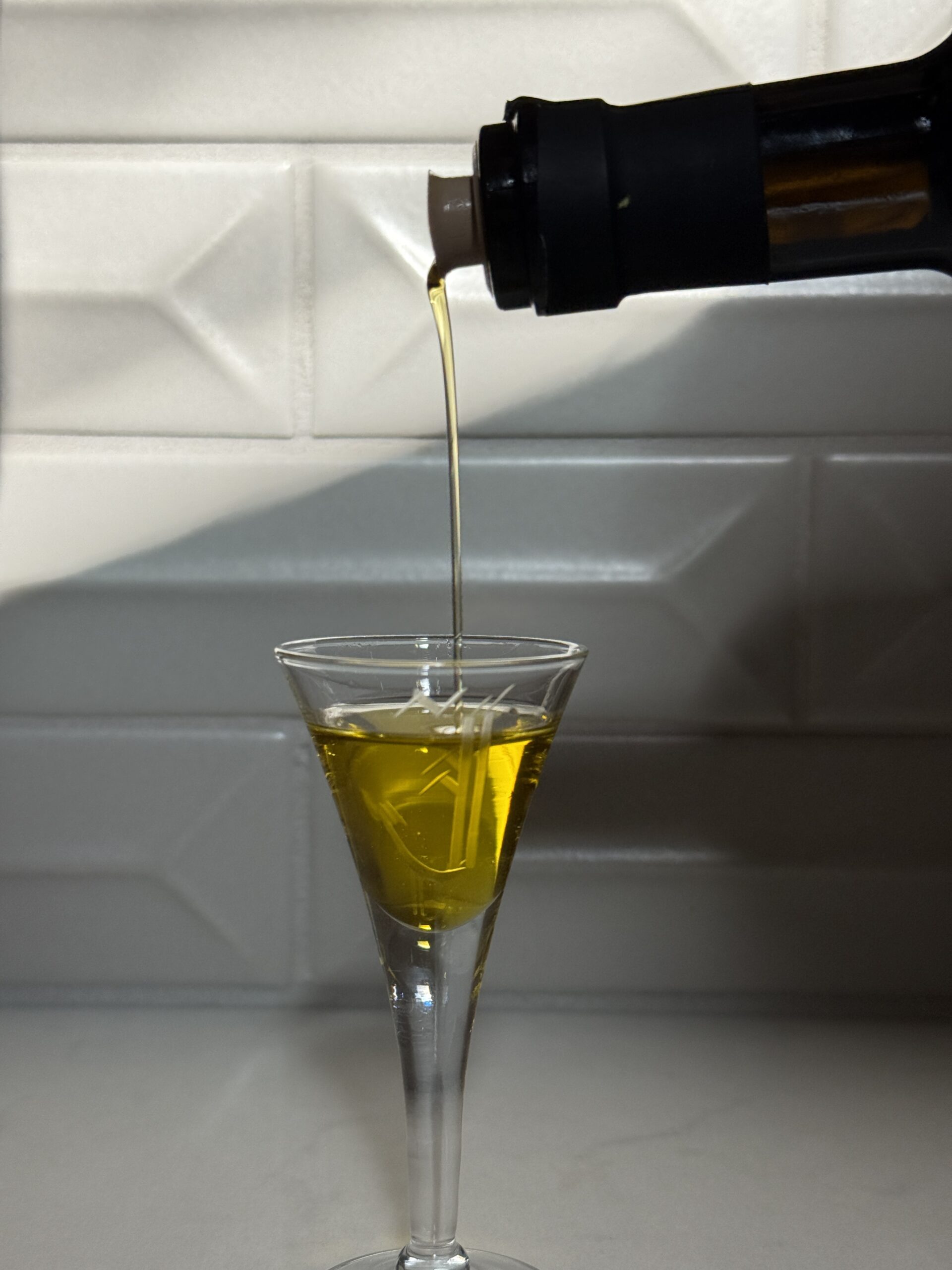
The bottle should be opaque: Exposure to light and heat makes olive oil go bad fairly quickly; therefore, a high-quality olive oil will be bottled in dark glass or metal preferably.
Certified by a third party: Seals from organizations like the California Olive Oil Council (COOC) or International Olive Council (IOC) add legitimacy.
🥄 My Favorite Olive Oils
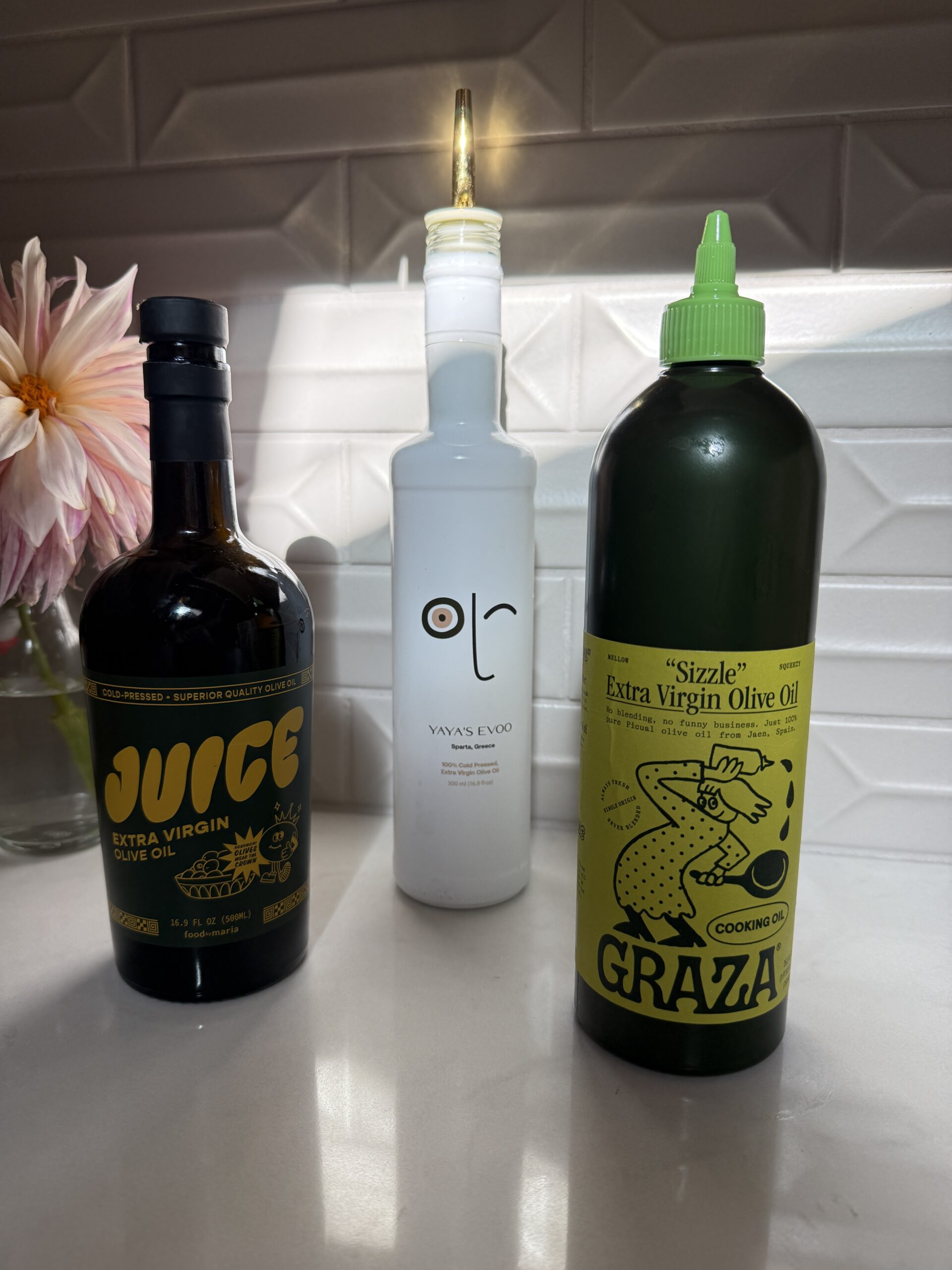
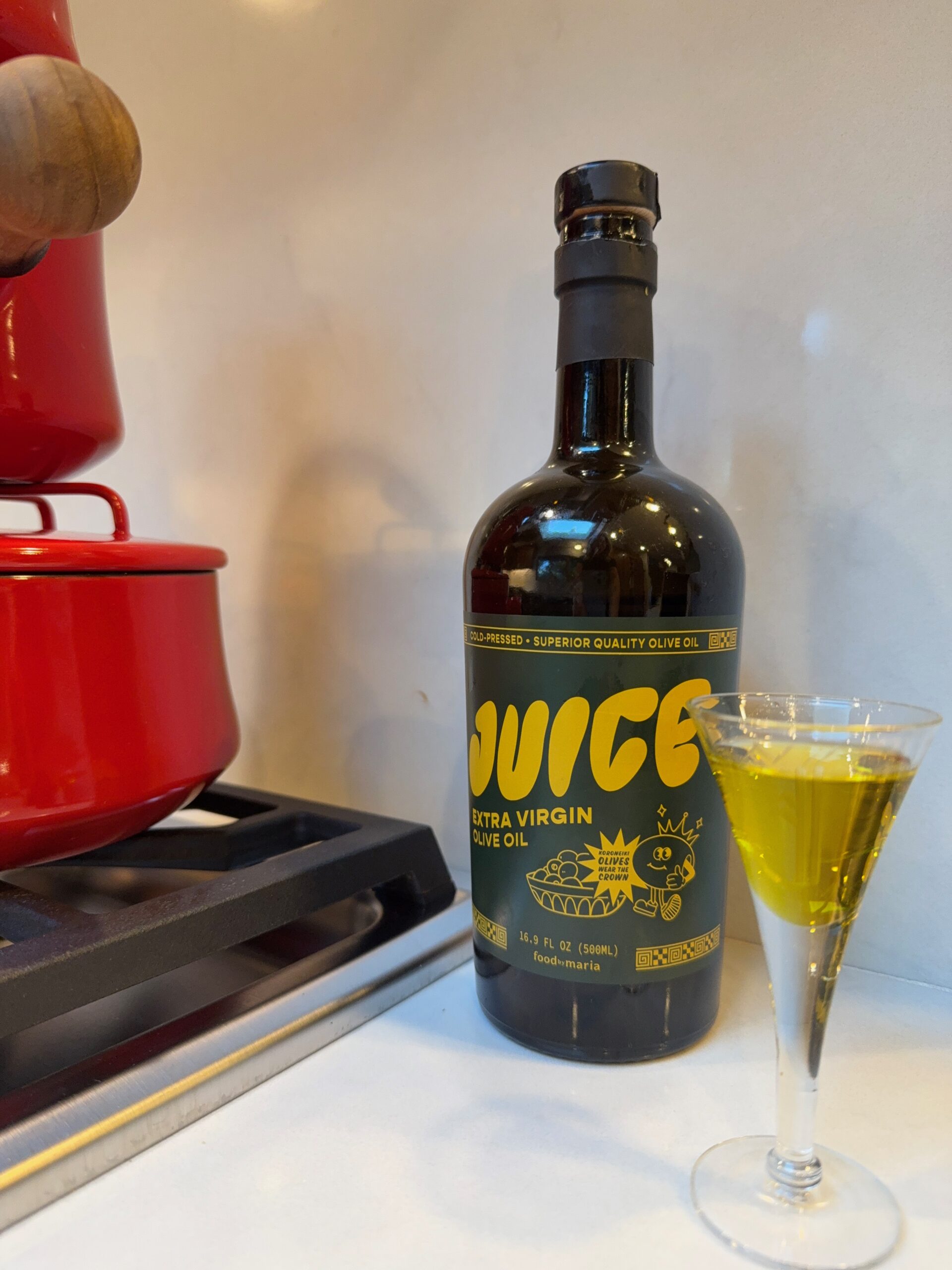
Food By Maria’s Juice
Crafted from prized Koroneiki olives in sun-drenched Messenia, Greece, this 100% natural extra virgin olive oil is rich in polyphenols and has a remarkably low acidity. That rare balance gives it a vibrant bitterness, peppery finish, and smooth, clean taste.
Handpicked early in the season and processed with cutting-edge, low-temperature methods, the result is a golden-green oil that’s medium-fruity, balanced, and versatile, making it perfect for everyday cooking and drizzling raw.
Madhava
Every bottle of Madhava is Clean Label Project certified and rigorously tested for more than 400 potential toxins, pesticides, and heavy metals, ensuring you’re getting one of the cleanest olive oils on the market.
Flavor-wise, it’s smooth and grassy with a well-rounded finish, making it incredibly versatile. You can use it for sautéing, roasting, or whisking into salad dressings, and it still holds its own when drizzled over fresh greens or bread. Madhava is the rare oil that’s both a kitchen staple and a health-conscious choice.
Yaya’s
Yaya’s brings the heart of Greece straight your table. Made from hand-harvested Koroneiki olives, this oil is rich, peppery, and full of character. You’ll feel like you’re in a Mediterranean kitchen!
The attention to tradition is what makes it stand out. Every step, from harvest to bottling, is done with care to preserve freshness and authenticity. The result is a robust, golden-green oil that’s perfect for dipping bread, finishing roasted veggies, or brightening up simple dishes with a touch of depth and warmth.
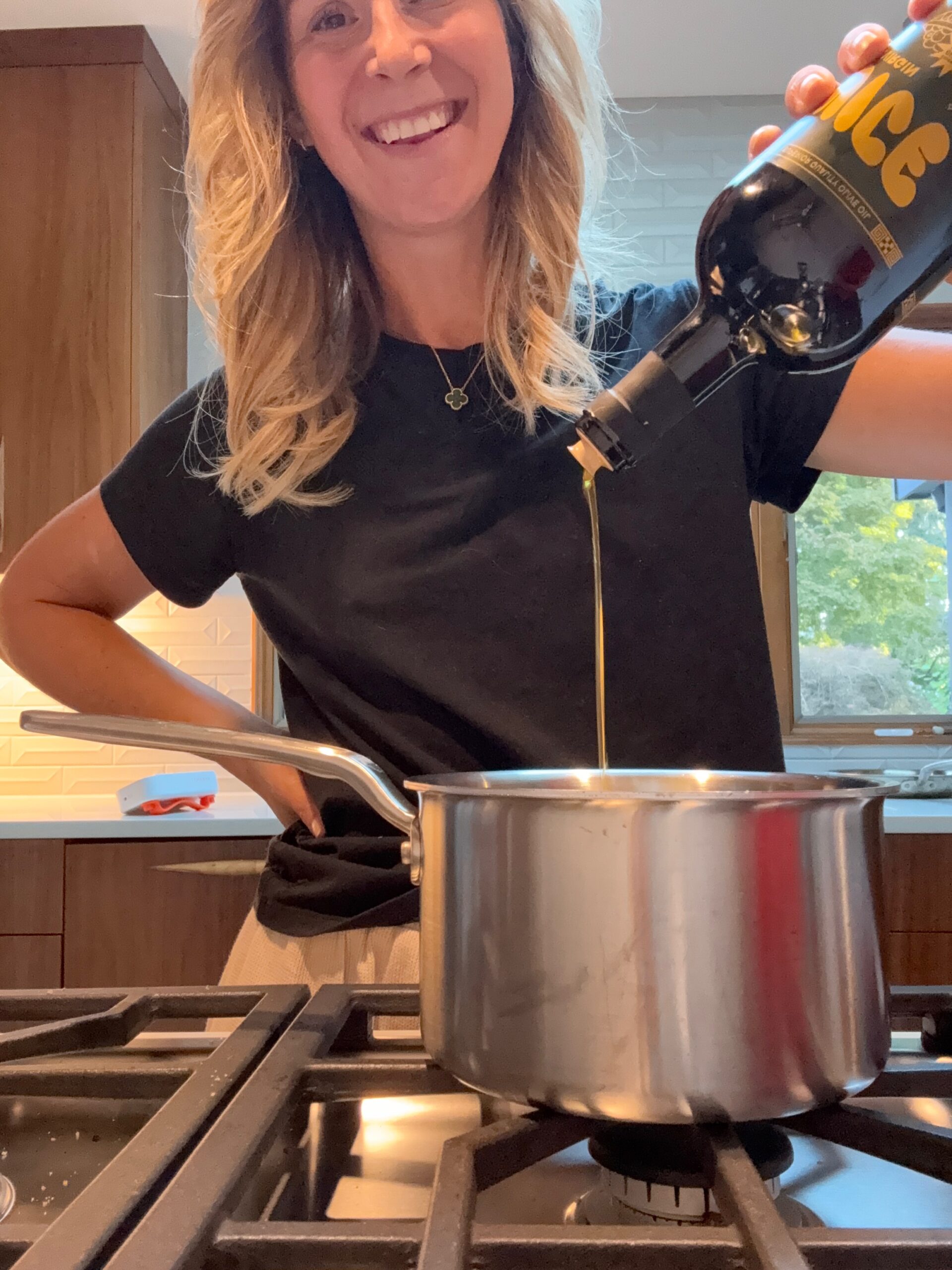
🧑🍳 How I Use Olive Oil
- Dip with warm crusty sourdough and a pinch of sea salt
- Toss with fresh herbs and roasted veggies
- Swirled into hummus
- Tossed in salads or make my gut-healing dressing
- Used in baked goods
Storing Olive Oil
Real, quality olive oil is perishable so treat it like a fresh ingredient. Light, heat, and air are olive oil’s worst enemies. That’s why good producers use dark bottles or tins and why you should never keep your bottle next to the stove. Treat it like a fine wine (stored in a cool, dark place) and you’ll preserve both flavor and antioxidants.