

This post may contain affiliate links. Please see our disclosure policy.
This soft scrub cleaning paste comes straight from my Grandmother! And it is a powerhouse!
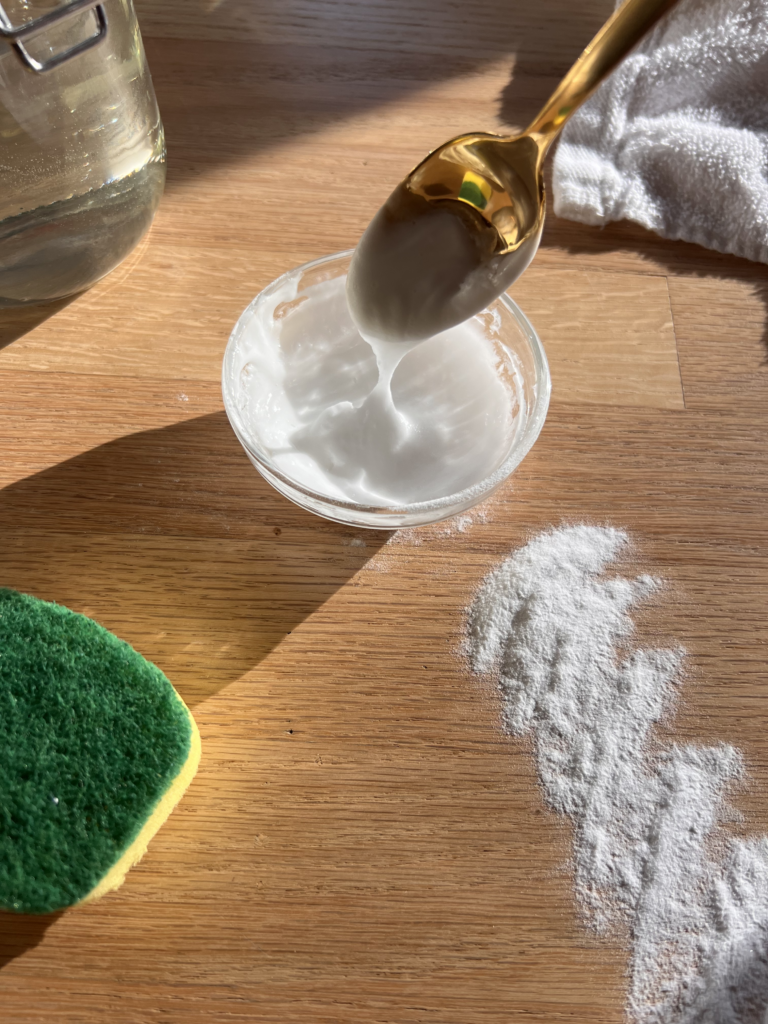
This homemade cleaning paste is a natural and effective solution for tackling tough stains and grime on various surfaces. Made from simple ingredients it provides gentle yet powerful cleaning without harsh chemicals.
❤️ Why You’ll Love My Soft Scrub
You’ll love my homemade soft scrub paste because it’s a natural, effective, and eco-friendly solution that cleans tough stains without harsh chemicals, keeping your home sparkling and safe.
Watch more about my homemade non-toxic all-purpose soft scrub on my Instagram!
🧽 Soft Scrub Materials
What makes Castile soap so effective? And why do I love it?
The oils used in Castile soap contain fatty acids that have natural cleaning properties. These fatty acids can break down dirt, grease, and grime, making Castile soap an effective cleanser for both personal hygiene and household cleaning tasks.
🧼Soft Scrub: How to Do
This soft scrub is so helpful in the kitchen and in the bathroom…and so much more! Remember, apply the homemade soft scrub to the surface you want to clean. Use enough to cover the area you’re targeting, but you don’t need to apply a thick layer.
Be sure to use a sponge, scrub brush, or cloth to scrub the surface in a circular motion. The gentle abrasiveness of the
🪄 Tips and Tricks for My Soft Scrub
Be sure that once you’ve finished scrubbing, rinse the surface thoroughly with water to remove any residue from the soft scrub. Make sure to rinse well to avoid leaving any
After rinsing, inspect the surface to see if it’s clean to your satisfaction. If there are still stubborn stains or areas that need more attention, you can repeat the process as needed.
🗒 Variations
- Peppermint Fresh: Replace the lemon essential oil with peppermint essential oil for a refreshing twist. Peppermint oil has a cooling effect and can leave your surfaces smelling clean and invigorated.
- Lavender Serenity: Swap the lemon essential oil for lavender essential oil to create a calming and soothing soft scrub. Lavender oil has relaxing properties and can add a lovely floral scent to your cleaning routine.
- Citrus Burst: Instead of using just lemon essential oil, create a citrus blend by combining lemon, orange, and grapefruit essential oils. This combination will create a bright and uplifting aroma while providing powerful cleaning properties.
- Tea Tree Defense: Replace the lemon essential oil with tea tree essential oil for an extra boost of antibacterial and antifungal power. Tea tree oil is great for targeting mold and mildew in bathrooms and other damp areas.
- Herbal Infusion: Add dried herbs like rosemary, thyme, or sage to the mixture for a natural infusion. Simply mix the dried herbs with the
baking soda before adding the Castile soap and other ingredients. This can add an extra layer of fragrance and cleaning power to your soft scrub. - Exfoliating Scrub: For a more exfoliating scrub, add a tablespoon of finely ground salt or sugar to the mixture. This will help to slough away dead skin cells and leave your surfaces feeling extra smooth and clean.
- Coconut Bliss: Replace the water with coconut milk for a luxurious soft scrub experience. Coconut milk is moisturizing and can leave your skin feeling soft and nourished after cleaning.
Feel free to experiment with these variations to find the combination that works best for your cleaning needs and preferences. Remember to adjust the quantities as needed to achieve the desired consistency and scent strength.
🗒 Substitutions
- Baking Soda:
- If you don’t have
baking soda on hand, you can substitute it with baking powder. However, baking powder may not be as abrasive asbaking soda , so you may need to adjust the scrubbing technique accordingly. - Alternatively, you can use finely ground salt or even finely ground oatmeal as a gentle abrasive substitute for
baking soda .
- If you don’t have
- Castile Soap:
- If you don’t have Castile soap, you can substitute it with liquid dish soap or liquid hand soap. Look for mild, natural options without harsh chemicals.
- Another alternative is to use a combination of vinegar and water. Vinegar has natural cleaning properties and can help cut through grease and grime.
- Water:
- Water is often used in soft scrub recipes to adjust the consistency of the mixture. If you prefer not to use water, you can substitute it with other liquids such as vinegar, lemon juice, or aloe vera gel.
- Keep in mind that substituting water with other liquids may alter the scent and cleaning properties of the soft scrub.
- Lemon Essential Oil:
- Lemon essential oil is commonly used in soft scrub recipes for its fresh scent and natural cleaning properties. If you don’t have lemon essential oil, you can substitute it with other citrus essential oils such as orange, grapefruit, or lime.
- Alternatively, you can use other essential oils with antibacterial or aromatic properties, such as tea tree oil, lavender oil, or peppermint oil.
🫙 How to Store
- Airtight Container: Transfer the homemade soft scrub to an airtight container for storage. Glass jars with tight-fitting lids or plastic containers with secure seals work well for this purpose. Make sure the container is clean and dry before transferring it to prevent contamination.
- Cool, Dry Place: Store the sealed container of soft scrub in a cool, dry place away from direct sunlight. Exposure to heat and sunlight can degrade the ingredients and reduce the effectiveness of it over time. A pantry or cabinet in your kitchen is a suitable storage location.
- Labeling: Label the container with the date of preparation and any specific instructions or ingredients used. This will help you keep track of when the soft scrub was made and ensure that you use it before it expires.
- Regular Checks: Periodically check the consistency and smell of the soft scrub to ensure that it hasn’t gone bad. If you notice any changes in texture, color, or odor, it may be a sign that the soft scrub has spoiled and should be discarded.
- Use within a Reasonable Timeframe: While it doesn’t contain preservatives like commercial products, it can typically last for several months when stored properly. However, it’s best to use it within a reasonable timeframe to ensure optimal effectiveness. Consider making smaller batches to use within a few weeks to a couple of months.
🤔 Common Questions
Homemade soft scrub is generally safe to use on most surfaces, including sinks, countertops, bathtubs, and tile grout. However, it’s always a good idea to test it on a small, inconspicuous area first to ensure compatibility, especially for delicate surfaces like marble or granite.
Yes, homemade soft scrub made with natural ingredients like
Yes, it is made with natural ingredients is generally safe for septic systems. Unlike commercial cleaners that contain harsh chemicals, this scrub won’t harm the beneficial bacteria in septic tanks. Additionally, the biodegradable nature of the ingredients makes it environmentally friendly.
Yes, homemade soft scrub can be used to clean stainless steel appliances. However, avoid using abrasive materials or harsh scrubbing techniques, as these can scratch the surface. Instead, apply the scrub gently with a soft cloth or sponge, and rinse thoroughly with water afterward.

Soft Scrub
Ingredients
- 1 cup baking soda
- ¼ cup Castile soap
- 1 tablespoon water, optional
- 10 drops lemon essential oil, optional
- 1-3 tablespoon Hydrogen Peroxide (3% solution) for whitening/disinfecting , optional

Instructions
- In a mixing bowl, combine the baking soda and Castile soap. Mix well until you achieve a thick, paste-like consistency. If the mixture is too dry, you can add a tablespoon of water at a time until you reach your desired consistency.
- If using, add peroxide stir in a "splash" or about 1–3 tablespoons of 3% hydrogen peroxide until a paste with a spreadable, whipped consistency is formed.
- If using, add the lemon essential oil to the mixture and stir until well combined. Lemon essential oil not only adds a pleasant scent but also has natural antibacterial properties that can enhance the cleaning power of your soft scrub.
- Transfer the mixture to an airtight container for storage. An old jar or squeeze bottle works well for this purpose.
- To use, apply a small amount of the soft scrub to the surface you want to clean. Use a sponge, scrub brush, or cloth to scrub the surface in a circular motion, concentrating on any areas with stubborn stains or grime.
- Once you’ve finished scrubbing, rinse the surface thoroughly with water to remove any residue from the soft scrub.
This worked exactly as written, thanks!